
" Make your own field and continue to be Ritvik and act on my behalf." - Śrīla Prabhupāda: July 31, 1977.
Saturday, 7 January 2012

Friday, 6 January 2012
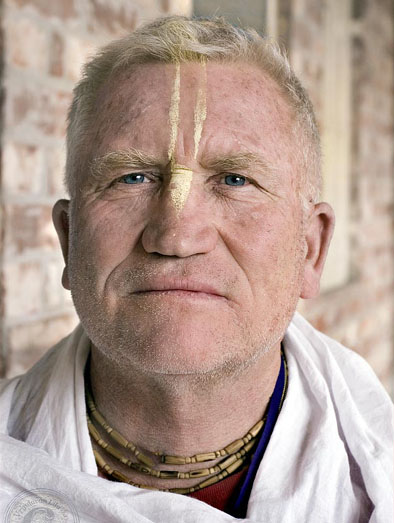
Gurukrpa speaks on ISKCON History
Gurukripa dasa speaks with Bhakta dasa:
Answer: Because it did not matter. Srila Prabhupada said
Question to GK: What happened the final months of SP’s
appearance in connection with the process of initiating new devotees?
Answer: Nothing happened. In the beginning SP did the
disksa, the yajna and the name giving. As the numbers increased, he
authorized GBC, and senior sanyassis to pick names and chant on the
beads, etc. In 1977 during the months of May, June, July 1977 I was in
Vrindaban with Srila Prabhupada, giving him his massage in his bed
between 1 AM and mangala aratik. During the day, many letters would
arrive. Satsvarupa Swami was the secretary and we decided that only
letters that would give joy to Srila Prabhupada would be read. Like
numbers of books sold, etc. A maximum of five letters daily were read
to SP.
disksa, the yajna and the name giving. As the numbers increased, he
authorized GBC, and senior sanyassis to pick names and chant on the
beads, etc. In 1977 during the months of May, June, July 1977 I was in
Vrindaban with Srila Prabhupada, giving him his massage in his bed
between 1 AM and mangala aratik. During the day, many letters would
arrive. Satsvarupa Swami was the secretary and we decided that only
letters that would give joy to Srila Prabhupada would be read. Like
numbers of books sold, etc. A maximum of five letters daily were read
to SP.
After some weeks like this, there were stacks and stacks of
letters, all relating to initiation. Hundreds of people were panicking
that SP would leave the planet before they were given initiation. At
this time, this situation was brought before SP in his room by
Satsvarupa, Tamal, myself, and maybe some others.
that SP would leave the planet before they were given initiation. At
this time, this situation was brought before SP in his room by
Satsvarupa, Tamal, myself, and maybe some others.
Up until this time it was a very simple matter that we were
doing the initiations, but we first had to ask permission. SP NEVER
refused any recommendation from his senior men. And personally, I would
sometimes argue with some GBC that they were giving it too easily.
refused any recommendation from his senior men. And personally, I would
sometimes argue with some GBC that they were giving it too easily.
At this meeting, SP basically said, “From here on, if you
feel they are ready, then you may give the initiation on my behalf.” I
understood this for what it was, simply extending the authority a
little further than it had been. Tamal Krsna Swami, began to say, “But
who will do it?. Which devotees will do this?” Srila Prabhupada said,
“The nearest one will do it. Whoever is closest.” Tamal said, “Can
Bhavananda do? Can Jayapataka do?” Thus these eleven names came out.
Question: Why were you not on the list of eleven?understood this for what it was, simply extending the authority a
little further than it had been. Tamal Krsna Swami, began to say, “But
who will do it?. Which devotees will do this?” Srila Prabhupada said,
“The nearest one will do it. Whoever is closest.” Tamal said, “Can
Bhavananda do? Can Jayapataka do?” Thus these eleven names came out.
Answer: Because it did not matter. Srila Prabhupada said
whoever was closest. I was already doing and Srila Prabhupada never
told me or anyone else not on the list to stop. For myself, it was not
very relevant because I was working in Japan and did not have any new
devotees to initiate.
told me or anyone else not on the list to stop. For myself, it was not
very relevant because I was working in Japan and did not have any new
devotees to initiate.
Tamal Krsna Swami, made these list of names himself and SP
signed the letter. But they were only priests to act on behalf of SP.
Tamal asked about Bhavananda who was not a TP or a GBC at that time.
And everyone new well of his homosexual tendencies. But, Tamal pushed
his name, because he was already planning how to take over when Srila
Prabhupada was gone.
Tamal asked about Bhavananda who was not a TP or a GBC at that time.
And everyone new well of his homosexual tendencies. But, Tamal pushed
his name, because he was already planning how to take over when Srila
Prabhupada was gone.
Question: How did Tamal Krsna Swami become so influential at
this time?
this time?
Gurukrpa: Tamal’s original service was as GBC in India. He
left that service without permission and arrived in America. Within one
year the temple presidents made a huge complaint to SP that he was
disrupting the temples by taking important men. I was in the room when
SP told Tamal to go to China. Hari Sauri’s memory of this incident is
not accurate. Either way that is another story.
Tamal went to New York to prepare to go to China. And in Mayyear the temple presidents made a huge complaint to SP that he was
disrupting the temples by taking important men. I was in the room when
SP told Tamal to go to China. Hari Sauri’s memory of this incident is
not accurate. Either way that is another story.
1976, he showed up in a suit in Honolulu, a broken man. He could not
get a visa to China, he had no service to do in India, and he could not
go back to America, so he was quite depressed. Approximately a day or
two later, SP called for Tamal and me at about 12:30 AM. He said, “My
feet are swelling, my teeth are getting loose, I am passing urine too
frequently. These are the first signs that death is coming.” Then he
sent us back to bed. The next day TKG volunteered to be SP’s
secretary, as the service was vacant at that time. From this position
he could control and manipulate the environment around Srila
Prabhupada. I can write many more stories that will shock people about
TKG’s ambitious nature and his desire to take SP’s seat..
get a visa to China, he had no service to do in India, and he could not
go back to America, so he was quite depressed. Approximately a day or
two later, SP called for Tamal and me at about 12:30 AM. He said, “My
feet are swelling, my teeth are getting loose, I am passing urine too
frequently. These are the first signs that death is coming.” Then he
sent us back to bed. The next day TKG volunteered to be SP’s
secretary, as the service was vacant at that time. From this position
he could control and manipulate the environment around Srila
Prabhupada. I can write many more stories that will shock people about
TKG’s ambitious nature and his desire to take SP’s seat..
After SP left, in November 1977, I stayed in Vrindaban till
Gour Purnima 1978 and there was no discussion of guru during these
three or four months, because SP’s last instruction, or as the ritvics
call it, “The final order”, was that “Now we have build a framework.
There is no need to try and expand more. If we can just maintain our
men and increase the chanting and hearing that is sufficient. We should
sit down now and chant and hear.”
three or four months, because SP’s last instruction, or as the ritvics
call it, “The final order”, was that “Now we have build a framework.
There is no need to try and expand more. If we can just maintain our
men and increase the chanting and hearing that is sufficient. We should
sit down now and chant and hear.”
There was NO TALK about initiations that I heard either in
Vrindaban or in Mumbai during these months. If SP has appointed these
eleven as spiritual masters, why did they not start initiating at once?
Because they all knew very well they were never appointed! We knew the
philosophy what is tattva darshi and what is Saksad Hari…but behind
closed doors there was a plot simmering. In the GBC meeting of 1978
the initiation issue was brought up and it appeared they had already
concluded that they were going to go ahead and say that they were
appointed. I asked Harikesh sitting next to me, ‘how are you going
to let people call you a paramahansa? You are not a realized soul, you
are a piece of shit. He turned to me with a smrik on his face, and
said “What are you going to do about it?” That is basically what
happened, none of us could do anything after that.
eleven as spiritual masters, why did they not start initiating at once?
Because they all knew very well they were never appointed! We knew the
philosophy what is tattva darshi and what is Saksad Hari…but behind
closed doors there was a plot simmering. In the GBC meeting of 1978
the initiation issue was brought up and it appeared they had already
concluded that they were going to go ahead and say that they were
appointed. I asked Harikesh sitting next to me, ‘how are you going
to let people call you a paramahansa? You are not a realized soul, you
are a piece of shit. He turned to me with a smrik on his face, and
said “What are you going to do about it?” That is basically what
happened, none of us could do anything after that.
In 1978, Janmastami, TKG came to Vrindavan to give Sannyasa
diskha to Bhagavan. I was the GBC at the time in Vrindavan. TKG
called from Delhi and demanded flower garlands and a large reception
greeting at the temple with vyasasana’s for them to sit on. I told
them this is Prabhupada’s temple and everybody can sit on the floor.
When they came I gave them no such reception, and the next morning in
Bhagavatwam, Bhagavan brought his politics into the class. I went and
told him, if you ever do this again, bringing politics into Bhagavatwam
class you will never speak again in any temple I manage. That day,
Bhavananda, TKG,and Bhagavan asked me to meet them in the guest house
for a meeting. When I came, they said, why are you making waves? Just
stop making trouble about this appointment of gurus and we’ll make you
the 12th guru at the next Mayapur meeting. I told them, Prabhupada did
not make anyone guru’s, you have to be a realized soul. They said
there was some talk about you in Japan doing some things, therefore
Prabhupada did not name you. I told them you are now believing your own
lies. They were silent. Bhavananda tried to speak. I told him to shut
his mouth because he was a homosex and he had never done service and
had been living off the money I collected and sent to Mayapur for
construction.
called from Delhi and demanded flower garlands and a large reception
greeting at the temple with vyasasana’s for them to sit on. I told
them this is Prabhupada’s temple and everybody can sit on the floor.
When they came I gave them no such reception, and the next morning in
Bhagavatwam, Bhagavan brought his politics into the class. I went and
told him, if you ever do this again, bringing politics into Bhagavatwam
class you will never speak again in any temple I manage. That day,
Bhavananda, TKG,and Bhagavan asked me to meet them in the guest house
for a meeting. When I came, they said, why are you making waves? Just
stop making trouble about this appointment of gurus and we’ll make you
the 12th guru at the next Mayapur meeting. I told them, Prabhupada did
not make anyone guru’s, you have to be a realized soul. They said
there was some talk about you in Japan doing some things, therefore
Prabhupada did not name you. I told them you are now believing your own
lies. They were silent. Bhavananda tried to speak. I told him to shut
his mouth because he was a homosex and he had never done service and
had been living off the money I collected and sent to Mayapur for
construction.
Question: So how did everyone become guru’s, if Prabhupada
did not make them gurus?
Gurukrpa: Had SP seen one of us as being capable, he would
have named that person or persons, but he did not mention that anyone
was fit. His Divine Grace B.V. Puri Maharaja, who SP said “is the only
god Brother who is not envious of me”, ask SP “Please stay another 8 or
10 years with these boys.” SP’s answer was, “They are all hard headed,
I have done all that I can do.”
have named that person or persons, but he did not mention that anyone
was fit. His Divine Grace B.V. Puri Maharaja, who SP said “is the only
god Brother who is not envious of me”, ask SP “Please stay another 8 or
10 years with these boys.” SP’s answer was, “They are all hard headed,
I have done all that I can do.”
Prabhupada said, “I can stay 100 years” many times, but he
left after 81 plus a few months.
In the GBC meeting of 1978, they shouted me down and they
had already decided the fix was in. This was how the future of ISKCON
was going to go.
was going to go.
Question: Is the GBC absolute since they are named as the
ultimate managing authority?
Gurukrpa: Prabhupada said the GBC would be the ultimate
managing authority. But that does not mean they are perfect, and they
have perfect vision. The process of the GBC meetings during the
years, we would have the meeting and report the days minutes of the
meeting nightly to Prabhupada. Usually it would take 5 days.
Prabhuapda said if you people were competent, you people would be done
in 30 minutes. In 1977, Prabhupdad told us, just have your meetings
and after 5 days give me all your resolutions. After 5 days of
meetings, the GBC filed in his room, sat down and read the resolutions;
and one after another. Srila Prabhupada said, ‘No I do not want that,
no that is not what I wanted’. He vetoed almost all the resolutions.
So to say the GBC is the ultimate authority is correct, but that does
mean that it is absolute. As you can see by how many guru’s have
fallen down, and how many GBC’s have had difficulties.
have perfect vision. The process of the GBC meetings during the
years, we would have the meeting and report the days minutes of the
meeting nightly to Prabhupada. Usually it would take 5 days.
Prabhuapda said if you people were competent, you people would be done
in 30 minutes. In 1977, Prabhupdad told us, just have your meetings
and after 5 days give me all your resolutions. After 5 days of
meetings, the GBC filed in his room, sat down and read the resolutions;
and one after another. Srila Prabhupada said, ‘No I do not want that,
no that is not what I wanted’. He vetoed almost all the resolutions.
So to say the GBC is the ultimate authority is correct, but that does
mean that it is absolute. As you can see by how many guru’s have
fallen down, and how many GBC’s have had difficulties.
Guru means one who has no other interest but to realize the
absolute truth, Krishna. The guru, must have first realized the Name
is non-different than Krishna. When I first joined the movement, we
spent 9 to 10 hours a day chanting in the street. These present GBC’s
do not spend that in a year. Hari nama eva kevalam, in this age only
the Holy Name, only the Holy Name. Your bureacuracy and your
mangagement is not the process. The elitisim being shown by the GBCs
putting themselves up on a platform, above all their god brothers is
absolute arrogance and the greatest sin of pride, the opposite of the
humble blade of grass. Krishna is the one giving all directions for
those who can hear him.
is non-different than Krishna. When I first joined the movement, we
spent 9 to 10 hours a day chanting in the street. These present GBC’s
do not spend that in a year. Hari nama eva kevalam, in this age only
the Holy Name, only the Holy Name. Your bureacuracy and your
mangagement is not the process. The elitisim being shown by the GBCs
putting themselves up on a platform, above all their god brothers is
absolute arrogance and the greatest sin of pride, the opposite of the
humble blade of grass. Krishna is the one giving all directions for
those who can hear him.
Must of us are now hitting 60 or more, we’ve made successful
businesses, won some, lost some, raised our families, and personally I
have gone to 25 straight Kartiks’ in Vrindavan. We have been excluded
from SP’s movement, it started in the GBC meeting of 1978. Still
today, the people who have appointed themselves for life have had very
little result. Rabindra Svarupa, the GBC of Hawaii, has come once in 6
years, and he will not give up the position. Kavicandra in Japan has
done nothing there in 25 years. Even one of these GBC guru’s does not
wear neck beads, tilak, sikah, or have any faith in the name is still a
member in good standing. In the west, most of the temples have more
deities than devotees. Most of the devotees are being paid, pujari’s
being paid, cooks being paid temple presidents are being paid, and they
have to bring Indian devotees just to keep the bare minimum going.
have gone to 25 straight Kartiks’ in Vrindavan. We have been excluded
from SP’s movement, it started in the GBC meeting of 1978. Still
today, the people who have appointed themselves for life have had very
little result. Rabindra Svarupa, the GBC of Hawaii, has come once in 6
years, and he will not give up the position. Kavicandra in Japan has
done nothing there in 25 years. Even one of these GBC guru’s does not
wear neck beads, tilak, sikah, or have any faith in the name is still a
member in good standing. In the west, most of the temples have more
deities than devotees. Most of the devotees are being paid, pujari’s
being paid, cooks being paid temple presidents are being paid, and they
have to bring Indian devotees just to keep the bare minimum going.
I have witnessed over all these years how the elitist
mentality of the GBC’s and guru’s have excluded all their god
brothers. They have put themselves on a high pedestal. They have no
taste for staying in the holy dhama’s of Mayapur and Vrindavna, and
they run back to their comfort zones soon as they finish the meetings.
brothers. They have put themselves on a high pedestal. They have no
taste for staying in the holy dhama’s of Mayapur and Vrindavna, and
they run back to their comfort zones soon as they finish the meetings.
In 1977, during the rainy season, all the GBC’s showed up in
Vrindavan.. SP said, we should go in a room and make out his will for
him. I.e., who would manage what properties and so forth…Kirtananda
and everyone was there, and they were going on saying someone will do
this, and someone will do that…I noticed how they totally left me
out. So I just went to the Yamuna and took my bath and came back to
find them still dividing everything up. When they were finished, it
was brought into SP room and read to him as he laid on his bed. After
they finished reading the will, the first question SP asked was, ‘Where
is Guru-krpa’s name’? I had already opened a dozen temples and
collected the most money in ISKCON history, up to that point, and they
totally left me out. But SP noticed it right away. So now, although I
am the first executor in his will, and he told me to develop Hawaii and
other places, (you made read the will), they also have totally
neglected that order. Giriraj even came and asked me if I would resign
from the will. I told him, ‘How can I give up the order of the guru’?
It is not as easy for me as you people.
him. I.e., who would manage what properties and so forth…Kirtananda
and everyone was there, and they were going on saying someone will do
this, and someone will do that…I noticed how they totally left me
out. So I just went to the Yamuna and took my bath and came back to
find them still dividing everything up. When they were finished, it
was brought into SP room and read to him as he laid on his bed. After
they finished reading the will, the first question SP asked was, ‘Where
is Guru-krpa’s name’? I had already opened a dozen temples and
collected the most money in ISKCON history, up to that point, and they
totally left me out. But SP noticed it right away. So now, although I
am the first executor in his will, and he told me to develop Hawaii and
other places, (you made read the will), they also have totally
neglected that order. Giriraj even came and asked me if I would resign
from the will. I told him, ‘How can I give up the order of the guru’?
It is not as easy for me as you people.
There is no new blood in this organization, things have
become stagnated and dry, not dynamic and the offense of neglecting all
their god-brothers by excluding them from their spiritual birthright,
they will have to answer to SP for this apparadha.
their god-brothers by excluding them from their spiritual birthright,
they will have to answer to SP for this apparadha.
Question: What is your idea of how the guru – disciple
relationship should now be handled in ISKCON?
Love can not be insituationalized. I feel in love with SP
the second I saw him. That is why I could surrender to the depth that
I did, to get the insurmountable service I did at that time. Once in
Mayapur, Kirtananda came to me, and said “Why are you giving all that
money to Prabhupada. You should give it to me, in America we are
protected. The communist one day will come and take these buidlings
away.. Prabhupada is making a big mistake.” I was shocked by what I
just heard. At that time, Kirtananda was considered by Satsvarupa to
be the greatest of the great, and the most divine of the divine. My
answer was, I do not care what he does with the money. He can flush it
down the toilet, for all I care, I just love to give it to him.
I did, to get the insurmountable service I did at that time. Once in
Mayapur, Kirtananda came to me, and said “Why are you giving all that
money to Prabhupada. You should give it to me, in America we are
protected. The communist one day will come and take these buidlings
away.. Prabhupada is making a big mistake.” I was shocked by what I
just heard. At that time, Kirtananda was considered by Satsvarupa to
be the greatest of the great, and the most divine of the divine. My
answer was, I do not care what he does with the money. He can flush it
down the toilet, for all I care, I just love to give it to him.
Its a matter of the heart. According to one’s state of the
heart, if one has many material desires, he may say he loves Bhagavan
Sai Baba, the Pope, Charles Manson. Its according to one’s sukriti.
Krishna is sitting in one’s heart, He knows exactly what our intentions
are. Before anyone has a right to ask a question, you must first enter
the class. The price is surrender. Those who have not fully
surrendered can not understand those who have surrenedered. Those who
have surrendered can understand about everyone.
Sai Baba, the Pope, Charles Manson. Its according to one’s sukriti.
Krishna is sitting in one’s heart, He knows exactly what our intentions
are. Before anyone has a right to ask a question, you must first enter
the class. The price is surrender. Those who have not fully
surrendered can not understand those who have surrenedered. Those who
have surrendered can understand about everyone.
SP initiated thousands, he told me once in his room in
Vrindavan, he said “My guru ordered me to go to the west, and I did
that. My main service was to translate these books and I did that. I
have a personal desire to build these temples in India. That is my
personal program. But they (his disciples) will not give me money and
my head is getting hot. I have to translate these books, write many
letters, and I am thinking how to raise the money to build these
temples because my disciples have their own programs and will not give
me money.” So, seeing SP like this, I told him that from today forth,
you just translate the books peacefully, and I will take the headache
and go and get the money. When I walked out of the room, I could not
believe what I just said. So to think all the GBC are 100% surrendered
souls, and the gurus are 100% surrenderd souls with no self interest,
and their only interest is to serve SP mission, they did not even care
during his time(SP time). SP said he would be happy, if he could get
one moon. To get one disciple who would be perfect, out of many
thousands. How rare is a personality of SP character.
that. My main service was to translate these books and I did that. I
have a personal desire to build these temples in India. That is my
personal program. But they (his disciples) will not give me money and
my head is getting hot. I have to translate these books, write many
letters, and I am thinking how to raise the money to build these
temples because my disciples have their own programs and will not give
me money.” So, seeing SP like this, I told him that from today forth,
you just translate the books peacefully, and I will take the headache
and go and get the money. When I walked out of the room, I could not
believe what I just said. So to think all the GBC are 100% surrendered
souls, and the gurus are 100% surrenderd souls with no self interest,
and their only interest is to serve SP mission, they did not even care
during his time(SP time). SP said he would be happy, if he could get
one moon. To get one disciple who would be perfect, out of many
thousands. How rare is a personality of SP character.
The GBC’s duty is to see that SP standard is being
maintained. That standard is based on chanting and hearing, also
becoming a lover of Krishna. If SP said I bless you, I give you a
benediciton, it will manifest. He has the right, the adhikari to do
that. If someone else says I am your guru, I am giving you diskha,
can he give you Krishna? Can he give you the holy name? Can he take
you to Vaikanthua? Have you been there, has the guru been there? SP
told me in the car in New Zealand, he turned to me in the car, and
said, while you were building Krishna Balarama temple in Vrindavan.
Krishna was building you a house in Goloka. I have seen it, it is very
nice. That is why you can only surrender to the depths, to one who is
from that place, and who can you give you that place, who wants that
place, otherwise it is just a big show. Whistels and bells with no
substance.
becoming a lover of Krishna. If SP said I bless you, I give you a
benediciton, it will manifest. He has the right, the adhikari to do
that. If someone else says I am your guru, I am giving you diskha,
can he give you Krishna? Can he give you the holy name? Can he take
you to Vaikanthua? Have you been there, has the guru been there? SP
told me in the car in New Zealand, he turned to me in the car, and
said, while you were building Krishna Balarama temple in Vrindavan.
Krishna was building you a house in Goloka. I have seen it, it is very
nice. That is why you can only surrender to the depths, to one who is
from that place, and who can you give you that place, who wants that
place, otherwise it is just a big show. Whistels and bells with no
substance.
My view of seeing this organization, it is croniyism. Most
of the leaders, their hearts are still, steel framed, they are self
interested. They are not self-less. They have stopped somewhere on
this road back to Godhead; they are satisfied with their easy
lifestyle, food, respect, honor, travelling all at the expense of the
community and the younger devotees who go on the street. Its a long
way from chant, dance and be happy.
Question: Then how did it come about that immediately afterinterested. They are not self-less. They have stopped somewhere on
this road back to Godhead; they are satisfied with their easy
lifestyle, food, respect, honor, travelling all at the expense of the
community and the younger devotees who go on the street. Its a long
way from chant, dance and be happy.
SP was not present physically, these eleven became worship able as
paramahamsas of the highest order?
paramahamsas of the highest order?
Gurukrpa: Because it is the cheaters and the cheated. People
are basically sudras who want a master tell them what to do. They do
not have sufficient intelligence, or spiritual knowledge,therefore they
not have sufficient intelligence, or spiritual knowledge,therefore they
accepted; and the more realized devotees left , after trying to
correct things. They were told to leave because they were disturbing
the faith of the new disciples.
correct things. They were told to leave because they were disturbing
the faith of the new disciples.
Because they could not take it any more any more they left.
Now it has become like the Pol Pot regime, “accept our way, or die.”
Devotees never die, KRSNA is always in their hearts. They are the
losers for losing the association of their brothers & sisters. The
senior men can do something, other wise the new men cannot do without
the association of the older devotees.
Devotees never die, KRSNA is always in their hearts. They are the
losers for losing the association of their brothers & sisters. The
senior men can do something, other wise the new men cannot do without
the association of the older devotees.
Most of the older devotees now also do not have the
missionary spirit. SP said, as a group we can’t be broken, but alone we
are all easily broken..
are all easily broken..
The leaders have never cared for the God Brothers/sisters.
They are happy when the see their brother get victimized by Maya, and
never come to try and rescue them. Do you think SP is happy to see the
present leader’s disciples at his temples and not his own disciples????
They talk of love of God, but they do not care one bit for their own
family members, unless the family agrees to accept everything they say.
They have no peers around them that may object to anything.
I AM A VERY FALLEN SOUL. I AM NOT BASICALLY A FAULT FINDER, WHICH IS WHY I DID NOT SPEAK UP FOR THE LAST 30 YEARS. SO MANY PEOPLE ASK ME TO WRITE A BOOK, BUT I HAVE NOT. I HAVE LIVED VERY NICELY BY SRILA PRABHUPADA’S GRACE. I WILL BE VERY HAPPY TO SEE THE GBC ACTUALLY BECOME REAL GBC AND GENUINE LOVING COMPASSIONATE VAISNAVAS.never come to try and rescue them. Do you think SP is happy to see the
present leader’s disciples at his temples and not his own disciples????
They talk of love of God, but they do not care one bit for their own
family members, unless the family agrees to accept everything they say.
They have no peers around them that may object to anything.
Thursday, 5 January 2012
Srimad-Bhagavatam warns of kali-yuga panditas
By: Iskcontimes
 lingam
lingam - the external symbol; eva — merely; asrama-khyatau — in knowing a person's spiritual order; anyonya — mutual;apatti — of exchange; karanam — the cause; avrttya — by lack of livelihood; nyaya — in credibility; daurbalyam — the weakness; panditye — in scholarship; capalam — tricky; vacah — words
TRANSLATION
A person's spiritual position will be ascertained merely according to external symbols, and on that same basis people will change from one spiritual order to the next. A person's propriety will be seriously questioned if he does not earn a good living. And one who is very clever at juggling words will be considered a learned scholar.
- Srimad Bhagavatam 12.2.4
A person's spiritual position will be ascertained merely according to external symbols, and on that same basis people will change from one spiritual order to the next. A person's propriety will be seriously questioned if he does not earn a good living. And one who is very clever at juggling words will be considered a learned scholar.
- Srimad Bhagavatam 12.2.4
Srimad-Bhagavatam predicts the situation of greedy sannyasis in kali yuga
SYNONYMS
avrtah- failing to execute their vows; batavah — the brahmacaris; asaucah — unclean; bhiksavah — prone to begging; ca — and; kutumbinah — the householders; tapasvinah — those who have gone to the forest for austerities; grama-vasah — village residents; nyasinah — the sannyasis; atyartha-lolupah — excessively greedy for wealth.
avrtah- failing to execute their vows; batavah — the brahmacaris; asaucah — unclean; bhiksavah — prone to begging; ca — and; kutumbinah — the householders; tapasvinah — those who have gone to the forest for austerities; grama-vasah — village residents; nyasinah — the sannyasis; atyartha-lolupah — excessively greedy for wealth.
TRANSLATION
The brahmacharis will fail to execute their vows and become generally unclean, the householders will become beggars, the vanaprasthas will live in the villages,and the sannyasis will become greedy for wealth.
- Srimad Bhagavatam 12.2.33
The brahmacharis will fail to execute their vows and become generally unclean, the householders will become beggars, the vanaprasthas will live in the villages,and the sannyasis will become greedy for wealth.
- Srimad Bhagavatam 12.2.33
Srimad-Bhagavatam predicts the appearance of bogus gurus, swamis etc.
SYNONYMS
sudrah — lowly, common workers; pratigrahisyanti — will accept religious charity; tapah — by shows of austerity; vesa — and by dressing as mendicants;upajivinah — earning their living; dharmam — the principles of religion; vaksyanti — will speak about; adharma-jnah — those who know nothing about religion;adhiruhya — mounting; uttama-asanam — a high seat.
sudrah — lowly, common workers; pratigrahisyanti — will accept religious charity; tapah — by shows of austerity; vesa — and by dressing as mendicants;upajivinah — earning their living; dharmam — the principles of religion; vaksyanti — will speak about; adharma-jnah — those who know nothing about religion;adhiruhya — mounting; uttama-asanam — a high seat.
TRANSLATION
Uncultured men will accept charity on behalf of the Lord and will earn their livelihood by making a show of austerity and wearing a mendicant's dress. Those who know nothing about religion will mount a high seat and presume to speak on religious principles.
Uncultured men will accept charity on behalf of the Lord and will earn their livelihood by making a show of austerity and wearing a mendicant's dress. Those who know nothing about religion will mount a high seat and presume to speak on religious principles.
PURPORT
The epidemic of bogus gurus, swamis, priests and so forth is explicitly described here.
- Srimad Bhagavatam 12.3.38
The epidemic of bogus gurus, swamis, priests and so forth is explicitly described here.
- Srimad Bhagavatam 12.3.38
Srila Prabhupada explains about the position of bogus gurus
Jayatirtha: Yesterday Nitai found a quote from the Puranas that says, “There are many gurus who will take away your money, but rare is the one who will take away your miseries.
Srila Prabhupada: Guravo bahavah santi vittapaharakah
Devotee: Yes, right.
Srila Prabhupada: guravo bahavah santi vittapaharakah tam tu gurum na pasyami sisya-santa-paharakah
There are many gurus. They are very expert in plundering disciples’ money, but it is very difficult to find out a guru who can take out all the anxieties of the disciple.” Sisya santa-paharakah. Guru is meant for taking away the santapa. Samsara-davanala-lidha-loka-tranaya karunya-ghanaghanatvam. “The sisya will be peaceful”—objective of life—that is the business of guru, not to take away his money.
Morning Walk Conversation with His Divine Grace A. C. Bhaktivedanta Swami Prabhupada - February 4, 1975
Achyutananda: If a man says, “I am giving you this donation because it is a spiritual organization,” but if the money is misused, does that man benefit.
Srila Prabhupada: If money is misused, then both of them become implicated. If it is not used for Krishna, then both of them becomes under the laws ofkarma.
Srila Prabhupada warns about so-called acharyas of the age of kali
loka-gati dekhi’ acarya karuna-hrdya
vicara karena, lokera kaiche hita haya
vicara karena, lokera kaiche hita haya
Seeing the activities of the world, the acharya felt compassion and began to ponder how He could act for the people.
PURPORT
This sort of serious interest in the welfare of the public makes one a bona fide acharya. An acharya does not exploit his followers. Since the acharya is a confidential servitor of the Lord, his heart is always full of compassion for humanity in its suffering. He knows that all suffering is due to the absence of devotional service to the Lord, and therefore he always tries to find ways to change people’s activities, making them favorable for the attainment of devotion. That is the qualification of an acharya. Although Sri Advaita Prabhu Himself was powerful enough to do the work, as a submissive servitor He thought that without the personal appearance of the Lord, no one could improve the fallen condition of society…
This sort of serious interest in the welfare of the public makes one a bona fide acharya. An acharya does not exploit his followers. Since the acharya is a confidential servitor of the Lord, his heart is always full of compassion for humanity in its suffering. He knows that all suffering is due to the absence of devotional service to the Lord, and therefore he always tries to find ways to change people’s activities, making them favorable for the attainment of devotion. That is the qualification of an acharya. Although Sri Advaita Prabhu Himself was powerful enough to do the work, as a submissive servitor He thought that without the personal appearance of the Lord, no one could improve the fallen condition of society…
The so-called acharyas of the Age of Kali are more concerned with exploiting the resources of their followers than mitigating their miseries; but Sri Advaita Prabhu, as an ideal acharya, was concerned with improving the condition of the world situation.
Chaitanya charitamrita - Adi 3.98
Chaitanya charitamrita - Adi 3.98
In ISKCON we are ALL being DISCIPLINED by Srila Prabhupada
MAHESH RAJA
One who is accepting discipline from Srila Prabhupada is Srila Prabhupada’s disciple.
In ISKCON we are ALL being DISCIPLINED by Srila Prabhupada (we receive instructions (DISCIPLINE) FROM Srila Prabhupada’s books. Even the most basic discipline, 16 rounds of Hare Krishna Mantra and four Regulative Principles are coming FROM Srila Prabhupada. Common sense — if you ARE being disciplined BY Srila Prabhupada then it follows you ARE Srila Prabhupada’s disciple. How can it be otherwise?
The MEANING of the word “disciple”
Srila Prabhupada’s Morning Walk, March 8, 1976 in Mayapur:
Prabhupada: “Discipline… Disciple means discipline. The word discipline comes from disciple, or disciple comes from discipline. So unless there is discipline, there is no question of disciple. This discipline must… That should be uniform. Otherwise, sisya… sisya, the word sisya, it comes from the root, verb, sas-dhatu. sas. sas means ruling. From this word, sasana. Sasana means government. sastra. sashtra means weapon, and sastra, scripture, and sisya… These things have come from the one root sas-dhatu. So sas-dhatu means ruling under discipline. There is another English word, that “Obedience is the first law of discipline,” or something. They say, “Obedience is the first law of discipline”? So I am right? “Obedience is…”? That is the…
Tamala Krsna: Yes, that’s more or less what it is.
Prabhupada: No, what is the word, exact. There is an English word. “Obedience is the first law of discipline.” So unless there is obedience, there cannot be any discipline. And unless there is discipline, there is no question of disciple. DISCIPLE MEANS ONE WHO FOLLOWS DISCIPLINE.” Discipline comes from Srila Prabhupada. We are actually being disciplined by Srila Prabhupada. It is Srila Prabhupada who has given us the regulative principles of no meat, fish or eggs; no intoxication (including tea and coffee), no illicit sex, and no gambling. It is Srila Prabhupada who has made it a regulative principle for us to chant sixteen rounds on the beads HARE KRSNA HARE KRSNA KRSNA KRSNA HARE HARE /HARE RAMA HARE RAMA RAMA RAMA HARE HARE.
Srila Prabhupada’s books contain all the instructions, the guidance required for us to get ourselves out of the clutches of the modes of material nature.
Wednesday, 4 January 2012
A letter to Srila Prabhupada
Return to the Hare Krishna Movement
A letter to Srila Prabhupada…
Dear Srila Prabhupada, Please accept my most humble obeisances, and kindly forgive my many offences. As is my custom, I am speaking to you directly as I often do, writing you letters, offering prayers from within my heart, or speaking to your picture or murti. And it is truly remarkable that you are always there for me, although I am just an unworthy disciple full of faults and shortcomings, but because I am thinking of myself as your disciple, you have always remained my ever well-wisher, and dearmost friend.
As you know, I left the society of devotees in 1978, shortly after your departure because of profound philosophical confusion, and because I still had some material desires. But I promised you, I promised myself, that I would return when I was 50 to again take up this great mission of yours. I have since returned into the society of devotees, to fulfill the promise I made, and am writing to inform you of the changes I have witnessed since my return to this once glorious Hare Krishna Movement. I am sad to report however it is not entirely the same Movement that I left many years ago.
As you know, I left the society of devotees in 1978, shortly after your departure because of profound philosophical confusion, and because I still had some material desires. But I promised you, I promised myself, that I would return when I was 50 to again take up this great mission of yours. I have since returned into the society of devotees, to fulfill the promise I made, and am writing to inform you of the changes I have witnessed since my return to this once glorious Hare Krishna Movement. I am sad to report however it is not entirely the same Movement that I left many years ago.
The temples I have visited in North America seem dried up and often devoid of life. The centers I remember when you were still personally present were all full to overcrowded, and there was great joy and much activity. I think this is due to three prominent issues, which I call to your attention. The first thing I noticed upon my return is the whole process of initiation has yet to be remedied. My godbrothers are still taking on disciples rather than initiating on your behalf as you instructed. Secondly, I noticed that your books were being changed! The translations and purports were being re-written. I was shocked by this, and could not believe this was happening! A cruel travesty was being perpetrated. And finally, to my surprise, I realized that devotees were being paid to perform their service. I remember when we performed our services and duties as an offering to you. We were performing devotional service, and working on your behalf, for the benefit of humanity. When did we become paid employees? In fact these three issues prompted me to write you this letter.
Of course I am not telling you anything you do not already know, for as you have shown me many times, you know what is in the hearts and minds of your disciples. And after all, we are materially conditioned souls, and there is a desire to Lord over material nature. The servant wants to become the master, the student thinks he is smarter than the teacher, and, as you have stated in the Teachings of Lord Chaitanya, when one is poor in Krishna Consciousness, he has a need for material gain. So I should not be to surprised at the changes to your Hare Krishna Movement, but am nonetheless very disappointed and dismayed.INITIATION
It was clearly stated in your July 9th, 1977 letter, addressed to all temple presidents and GBC how you wanted the initiations to go on. You clearly appointed 11 men to initiate on your behalf, and the names entered into your book of disciples. This would have kept the mission whole. You built a house in which the whole world could live, but sadly the Movement seems splintered into so many fractions, with everyone having a different Guru. I am sure this is not what you had intended.
As you recall, it was also the reason I left the society of devotees in 1978. Tamal Krishna Goswami was insisting that I take my second initiation from him, to set a good example for others to follow. One day a package arrived for me from Tamal with a very nice letter on stationary resembling yours. It was from His Divine Grace Tamal Krishna Goswami, and he enclosed a picture of himself for me to worship on my home altar. Although he was in fact my senior godbrother, an authority figure, and leader of the Radha Damodara Travelling Sankirtan Party, still I could not bring myself to worship him. I already have a Guru. He knew that perfectly well and was in attendance at my initiation ceremony from you. He was the leader of our party and knew full well that you initiated me and gave me the name Vyasasan das. Yet here he was trying to make me his new disciple. And so with deep regret I fled from the assembly of devotees, thinking that if I stayed, I feared I might lose sight of you.I am personally not bewildered by the whole Guru Issue, as I have asked for your help in this regard, and you have answered my prayers. In your writings (vani) you have said one should only have one spiritual master, and I have taken this instruction to heart. Also there was one interview you gave in the early days of this movement, when one reporter asked you, “Who will replace you when you are gone?” and you replied, “Only Lord Chaitanya can replace me”. You are the Sampradaya Acharya for this Hare Krishna Movement, and I will accept no one else as my Lord. Having said this, I also want to add that I have the utmost respect for all your disciples. I have great respect for anyone who is following your instructions or even thinking of themselves as your disciples both old and new, and I am in every devotee’s debt who has helped to advance your movement. I am also confident that the necessary changes to your society will someday be rectified.
BOOK CHANGES
This realization that your books were being re-written was a rude awakening. When it was pointed out to me that the beautifully written Bhagavad-Gita “As It Is”, had been altered, tampered with, changed, I was in utter disbelief. “Who could do such a thing? And Why?” My shock was profound with disbelief. “This must be a lie,” I thought, so I began to study the original 1972 Collier-Macmillan limited edition alongside the newer revised and enlarged edition that was being put out by The Bhaktivedanta Book Trust, and my shock was complete. I was devastated. “This is terrible” I thought. The pictures are different, the wording of the translations altered, and the purports you had so carefully written had been changed. The changes were so insidious; many devotees do not even notice the damaging and harmful consequences.
Your original writings were so full of life that when I read them I always felt as if you were speaking to me directly, but the new “revised and enlarged” edition was devoid of shakti and could be likened to reading someone’s “book report”. In school we had to do so many book reports, and we simply took what the author was saying and re-wrote it in our words. That is what this reminded me of. There was one verse in particular verse that summed up the evil transgressions that were being perpetrated:“Just try to learn the truth by approaching a spiritual Master. Inquire from him submissively and render service unto him. The self realized soul can impart the truth unto you because he has seen the truth.” (Original Edition: Bhagavad Gita 4.34)
“Just try to learn the truth by approaching a spiritual Master. Inquire from him submissively and render service unto him. The self realized souls can impart the truth unto you because they have seen the truth.” (Revised & Enlarged Edition: 4.34)
Just very small changes, and so subtle, but the new Gurus have just written themselves into your Bhagavad Gita. I am not a great scholar or learned brahmana; I am a simple devotee, so I will not try to explain to you in this letter all of the changes that are presently being debated by others more qualified than myself. I am simply reporting my observations, and expressing my disappointments and concerns. There was nothing wrong with the original Bhagavad Gita As It Is which you gave to us. It was a masterpiece. It was the book that brought all of your disciples to this movement, and so if it was good enough for all your early disciples and the leaders of your society, it is certainly good enough for all the younger and newer disciples as well.
If these books you have written are to stand the test of time, and retain their potency, then they must remain as you have left them. To change them is to doubt you. You are the greatest preacher and your words have the power to act upon the hearts of your audience.Srimad Bhagavatam reads:
“To Srila Prabhupada Bhaktisiddhanta Sarasvati Goswami Maharaja, MY SPIRITUAL MASTER, On the 26th Annual Ceremony of His Disappearance Day: He lives forever by his divine instructions, and the follower lives with him.”
So if this great literature, the Srimad Bhagavatam was written as an offering to your spiritual master and as your gift to the world, they should remain as such with your words and language intact. I accept that your writing are perfect and complete, and you have said countless times that everything we need to know is contained in your books. That they are being changed seems to me a total lack of respect, both to you and your spiritual master, and a total disservice to the devotees and world at large. I would like to see that new devotees and humanity at large have the same opportunity to associate with you directly through the median of your books as we, your early disciples did. Your books need no interpretation, no changes needed to be made. Your instructions were perfect and complete. Changing your writing is denying future generations of devotees from associating with you directly.
PAID DEVOTIONAL SERVICE
There is one last issue that I wish to discuss, as it was most confusing upon my return to this society. And that is the matter of “paid devotional service”. When I left the society of devotees in 1978 all the devotees I knew were still performing devotional service. There were exceptions, of course. If you were a householder and had responsibilities at the temple; you were given a “stipend” or allowance to meet the needs of one’s family. This was reasonable and natural. But today it seems there is an epidemic which is plaguing the society, and I refer to it as “paid devotional service”. I was surprised to find so much of what used to be described, as devotional service was now more akin to employment. I even had one guest ask me one day, “Where do I go to get a job application?” Even the guests and public see what is going on. When a new person comes to your centers, because he has read some of your books, he naturally has a desire to perform devotional service. However, they are quickly exploited and soon find themselves in the job line demanding a salary or they leave the temple altogether. I have witnessed this coming and going. Very sad that people who want to come to your centers and perform devotional service are in competition with paid devotees. Devotees who want to perform devotional service are a threat to those who are getting a wage. I miss the days when devotees worked together in the spirit of cooperation, and it wasn’t motivated by wages or position.
The real problem is our lack of faith in the leadership. Many devotees have indeed been exploited by the system that was set up after your departure. Who but yourself could be our ever-well wisher, dear most friend, and trusted leader? If the eleven men you appointed had followed your instructions and initiated on your behalf, entering the names in your book of disciples, the society would be in much better condition today. This is what I have witnessed, and I share it with you in the hopes you will enlighten me further in this regard.In closing I should also mention that there are many nice devotees still engaging themselves in your mission, trying to right the wrongs that have been perpetrated, caring nicely for the deities you installed for our benefit, distributing your books and continuing the Hari Nam Sankirtan mission of Lord Chaitanya Mahaprabhu. I long for the association of my fellow godbrothers, I offer them all respects, and pray for their swift return Back Home, Back to Godhead. But as you yourself said “we must choose our association even amongst Vaishnavas” So I am somewhat guarded these days, and feel myself most closely aligned with those devotees who are distributing your books and preaching nicely by good example. I have great hopes for the future on this great mission of yours. It is your desire to see this movement of Lord Chaitanya go on nicely for the benefit of humanity, and I have faith that Krishna will fulfill the desires of his pure devotee. O Srila Prabhupada! Please forgive my offences and kindly accept my most humble obeisances. Begging to remain forever in your divine service.
Your worthless yet loving disciple,
Vyasasan das
Tuesday, 3 January 2012
Initiation into Spiritual Life
by His Divine Grace Srila Bhaktisiddhanta Saraswati Maharaja
An article from Sree Sajjana Toshani December 1928
The ceremony of diksha or initiation is that by which the spiritual Preceptor admits one to the status of a neophyte on the path of spiritual endeavor. The ceremony tends to confer spiritual enlightenment by abrogating sinfulness. Its actual effect depends on the degree of willing co-operation on the part of the disciple and is, therefore, not the same in all cases. It does not preclude the possibility of reversion of the novice to the non-spiritual state, if he slackens in his effort or misbehaves. Initiation puts a person on the true track and also imparts an initial impulse to go ahead. It cannot, however, keep one going for good unless one chooses to put forth his own voluntary effort. The nature of the initial impulse also varies in accordance with the condition of the recipient. But although the mercy of the good preceptor enables us to have a glimpse of the Absolute and of the path of His attainment, the seed that is thus sown requires very careful tending under the direction of the preceptor, if it is to germinate and grow into the fruit and shade giving tree. Unless our soul of his own accord chooses to serve Krsna after obtaining a working idea of his real nature, he cannot long retain the Spiritual Vision. The soul is never compelled by Krsna to serve Him.But initiation is never altogether futile. It’ changes the outlook of the disciple on life. If he sins after initiation, he may fall into greater depths of, degradation than the uninitiated. But although, even after initiation temporary set-backs may occur, they do not ordinarily prevent the final deliverance. The faintest glimmering of the real knowledge of the Absolute has sufficient power to change radically and for good the whole of our mental and physical constitution and this glimmering is incapable of being totally extinguished except in extraordinarily unfortunate cases.
It is undoubtedly practicable for the initiated, if only he is willing, to follow the directions of the preceptor that lead by _slow degrees to the Absolute. The good preceptor is verily the savior of the fallen souls. It is, , however, very rarely that a person with modern culture feels inclined to submit to the guidance of another, especially in spiritual matters. But the very person submits readily enough to the direction of a physician for being cured of his bodily ailments.
Because these -latter cannot be ignored without consequences -that are patent to everybody. The evil that results from our neglect of the ailments of the soul is of a nature that paralyses and deludes our understanding and prevents the recognition of itself. Its gravity is not recognized as it does not apparently stand in the way of our worldly activities with the same directness as the other. The average cultured man, is, therefore, at liberty to ask questions without realizing any pressing necessity of submitting to the treatment of spiritual maladies at the hands of a really competent physician.
The questions that are frequently asked are as these: “Why should it be at all necessary to submit to any particular person or to subscribe to any particular ceremony for the purpose of realizing the Absolute Who by His nature is unconditioned? Why should Krsna require our formal declaration of submission to Himself? Would it not be more generous and logical to permit us to live a life of freedom in accordance with the principles of our perverted nature which is also His creation? Admitting that it is our duty to serve Krsna, why should we have to be introduced to Him by a third party? Why is it impossible for one to serve Sri Krsna directly?” It would no doubt be highly convenient and helpful to be instructed by a good preceptor who is well-versed in the Scriptures in understanding the same. But one should never submit to another to an extent that may furnish a rascal with an opportunity of really doing harm. The bad preceptor is a familiar character. It is inexplicable how those gurus who live in open sin contrive never-the-less to retain the unquestioning allegiance of the cultured portion of their disciples.
Such being the case, can we blame any person who hesitates to submit unconditionally to a preceptor, whether he is good or bad? It is of course necessary to be quite sure of the bonafides of a person before we accept him even tentatively as our spiritual guide. A preceptor should be a person who appears likely to possess those qualities that will enable him to improve our spiritual condition.
Those and similar thoughts are likely to occur to most persons who have received an English education, when they are asked to accept the help of any particular person as his spiritual preceptor. The literature, science and art of the West, body forth the principle of the liberty of the individual and denounce the mentality that leads one to surrender to however superior a person his right of choosing his own course. They inculcate the necessity and high value of having faith in oneself
But the good preceptor claims our sincere and complete allegiance. The good disciple makes a complete surrender of himself at the feet of the preceptor. But the submission of the disciple is neither irrational nor blind. It is complete on condition that the preceptor himself continues to be altogether good. The disciple retains the right of renouncing his allegiance to the preceptor the moment he is satisfied that the preceptor is a fallible creature like himself. Nor does a good preceptor accept any one as his disciple unless the later is prepared to submit to him freely. A good preceptor is duty bound to renounce a disciple who is not sincerely willing to follow his instructions fully. If a preceptor accepts as his disciple one who refused to be wholly guided by him, or if a disciple submits to a preceptor who is not wholly good, such a preceptor and such disciple are, both of them, doomed to fall from their spiritual state.
No one is a good preceptor who has not realized the Absolute. One who has realized the Absolute is saved from the necessity of walking on the worldly path. The good preceptor who lives the spiritual life is, therefore, bound to be wholly good. He should be wholly free from any desire for anything of this world whether good or bad. The categories of good and bad do not exist in the Absolute. In the Absolute everything is good. We can have no idea in our present state of this absolute goodness. Submission to the Absolute is not real unless it is also itself absolute. It is on the plane of the Absolute that the disciple is required to submit completely to the good preceptor. On the material plane there can be no such thing- as complete submission. The pretence of complete submission to the bad preceptor is responsible for the corruptions that are found in the relationship of the ordinary worldly guru and his equally worldly-minded disciples.
All honest thinkers will realize the logical propriety of the proposition set forth above. But most persons will be disposed to believe that a good preceptor in the above sense may not be found in this world. This is really so. Both the good preceptor and his disciple belong to the spiritual realm. But spiritual discipleship is nevertheless capable of being realized by persons who belong to this world. Otherwise there would be no religion at all in the world. But because the spiritual life happens to be realizable in this world it does not follow that it is the worldly existence which is capable of being improved into the spiritual. As a matter of fact the one is perfectly incompatible- with the other. They are categorically different from one another. The good preceptor although he appears to belong to this world is not really of this world. No one who belongs to this world can deliver us from worldliness. The good preceptor is a denizen of the spiritual world who has been enabled by the will of God to appear in this world in order to enable us to realize the spiritual existence.
The much vaunted individual liberty is a figment of the diseased imagination. We are bound willingly or unwillingly to submit to the laws of God in the material as well as in the spiritual world. The hankering for freedom in defiance of His laws is the cause of all our miseries. The total abjuration of all hankering for such freedom is the condition of admission to the spiritual realm. In this world we desire this freedom but are compelled against our will to submit to the inexorable laws of physical nature. This is the unnatural state. Such unwilling for forced submission does not admit us into the spiritual realm. In this world the moral principle, indeed claims our willing submission. But even morality also is a curtailment of freedom necessitated by the peculiar circumstances of this world. The soul who does not belong to this world is in a state of open or court rebellion against submission to an alien domination. It is by his very constitution capable of submitting willingly only to the Absolute.
The good preceptor asks the struggling soul to submit not to the laws of this world which will only rivet its chains but to the higher law of the spiritual realm. The pretence of submission to the laws of the spiritual realm without the intention of really carrying them out into practice is often mistaken for genuine submission by reason of the absence of fullness of conviction. We are, therefore, compelled in all cases to act on make-believes, viz. the so-called working hypotheses. The good preceptor tells us to change this method of activity which we have learnt from our experience of this world. He invites us first of all the be really and -fully informed of the nature and laws of the other world which happens to be eternally and categorically different from this phenomenal world. If we do not sincerely submit to be instructed in the alphabets of the life eternal but go on perversely asserting however unconsciously our present processes and so-called convictions against the instructions of the preceptor in the period of noviate we are bound to remain where we are. This also will amount to the practical rejection of all advise because the two worlds have nothing in common though at the same time we naturally fail to understand this believing all the time in accordance with our accustomed methods that we are at any rate partially, following the preceptor. But as a matter of fact when we reserve the right of choice we really follow ourselves, because even when we seem to agree to follow the preceptor it is because he appears to be in agreement with ourselves. But as the two worlds have absolutely nothing in common we are only under a delusion when we suppose that we really understand the method or the object of the preceptor or in other words reserve the right to assertion of the apparent self. Faith in the Scriptures can alone help us in this otherwise unpracticable endeavor. We believe in the preceptor with the help of the shastras when we understand neither. As soon as we are fully convinced of the necessity of submitting unambiguously to the good preceptor it is then and only then that he is enable to show us the way into the spiritual world in accordance with the method laid down in the shastras of that purpose which he can apply properly and without perpetrating fatal blunder in as much as he himself happens to belong to the realm of the spirit.
The crux of the matter lies not in the external nature of the ceremony of initiation as it appears to us because that is bound to be unintelligible to us being an affair of the other world, but in the conviction of the necessity and the successful choice of a really good preceptor. We can attain to the conviction of the necessity of the help of a good preceptor by the exercise of our unbiased reason in the light of our ordinary experience. When once this conviction has been truly formed Sri Krsna Himself helps us in finding the really good preceptor in two ways. In the first place he instructs us as regards the character and functions of a good preceptor through the revealed shastras. In the second place He Himself sends to us the good preceptor himself at the moment when we are at all likely to benefit by his instructions. The good preceptor also comes to us when we reject him. In such cases also it is certainly Krsna Who send him to us for no reason what-so-ever. Krsna has revealed from eternity the tidings of the spiritual realm in the form of transcendental sounds that have been handed down in the records of the spiritual Scriptures all over the world. The spiritual Scriptures help all those who are prepared to exercise this reason for the purpose of finding not the relative but the Absolute Truth to find out the proper instructor in accordance with their directions. The only good preceptor is he who can make us really understand the spiritual Scriptures and they enable us to realize the necessity and the nature of submission to the processes laid down in them. But there is still every chance of foul play. A very clever man or a magician may pass himself off as a person who can properly explain the Scriptures by means of his greater knowledge or deceptive arts. It is very important, therefore, that we should be on our guard against such tricks. The Scholar as well and the magician pretend to explain the Scriptures only in terms of the object or happenings of this world. But the Scriptures themselves declare that they do not tell us at all of the thing of this world. Those who are liable to be deluded by the arts of pervert yogis who persuade themselves into believing that the spiritual is identical with the perversion, distortion or defiance of the laws of physical nature. The laws of physical nature are not unreal. They govern the relation of all relative existences. In our present state it is therefore, always possible for another who possesses the power or the knowledge to demonstrate the merely tentative character of what we choose to regard as our deepest convictions by exposing their insufficiency or inapplicability. But such surprises as they belong to the realm of the phenomenal, have nothing to do with the Absolute. Those who have an unspiritual partiality for scholarship or for magic fall into the clutches of the pseudo-religionists. The serious plight of these victims of their own perversity will be realized from the fact that no one can be delivered from the state of ignorance by the method of compulsion. It is not possible to save the man who refuses on principle to listen to the voice of reason. The empiric pandits are no exception to this rule.
The plain meaning of the shastras should, therefore, be our only guide in the search of the good preceptor when we actually feel the need of his guidance. The Scriptures have defined the good preceptor as one who himself leads the spiritual life. It is not any worldly qualification that make the good preceptor. It is by unreserved submission to such a preceptor that we can be helped to re-enter into the realm. that is our real home but which unfortunately is veritable terra incognita to almost all of us at present and also impossible of access to one body and mind alike which is the result of the disease of abuse of our faculty of free reason and the consequent accumulation of a killing load of worldly experiences which we have learnt to regard as the very stuff of our existence.
“Srila Bhaktisiddhanta Maharaja explaining Guru-Tattva”
Question 4: “Is Srila Gurudeva a mortal human being?”
Srila Bhaktisiddhanta Maharaja: “Srila Gurudeva is never a mortal human being. He is not merely a lump of flesh and blood that may perish in a moment. In Srimad-Bhagavatam it is said that Srila Gurudeva is Bhagavan Himself. He is an incarnation.
By his own sweet will, Srila Gurudeva mercifully descends from the world of divinity to this one. He is eternally present in both manifest and non-manifest pastimes. He always resides as our lord and arouses our faculty of intelligence (buddhi-vrtti).
Sri guru – the embodiment of sat, cit and ananda – is a supra-mundane, exalted personality. One who considers him to be an ordinary human being will offend the holy name and find himself in hell. Sri guru is the knower of the reality of the soul, he is the knower of the reality of Sri Krishna and He is the most beloved fellow of Sri Caitanyadeva. He has descended just to deliver fallen souls like us. He is neither a karmi, nor jnani nor yogi; He is the topmost devotee of Bhagavan – a companion in the pastimes of the Ocean of Pastimes Himself.
Just as deva is eternal, sri guru is also eternal. Here the word deva refers to aprakrta kamadeva Sri Krishna, the God of transcendental love. Srila Gurudeva is the very svarupa of that same Krishna – that is, he is the non-different, intrinsic from of Krishna; he is the direct manifestation of Sri Krishna (prakasa-vigraha).
When we contemplate non-difference from the Lord, Srila Gurudeva holds the topmost position on the continuum of worshipful entities. Although he is Bhagavan Himself, he is very dear to the Lord. Srila Gurudeva manifests his pastimes as the embodiment (vigraha) of Visnu’s asraya-jatiya aspect – that is, as the Supreme abode of love of God. Sri guru and Sri Krishna are simultaneously and inconceivably one and different (acintya-bedhabheda-tattva). Srila Gurudeva is the supreme shelter of love of God (asraya-jatiya-tattva) and Sri Krishna is the Supreme Godhead (visaya-tattva). Srila Gurudeva is sevaka-bhagavan, the Lord as the abode of loving service, and Sri Krishna is sevya-bhagavan, the Lord in the mode of the object of loving service, or Svayam Bhagavan. In the vision of a disciple who has realized his own svarupa while pursuing raga-marga, Srila Gurudeva, who is so dear to Sri Mukunda, is perceived as non-different from Sri Krishna’s sakti – that is, he is a manifestation of Sri Varsabhanavi, Radhika.
Srila Gurudeva, who is exremely dear to Sri Krishna, is the internal potency (svarupa-sakti) while Sri Krishna is the fountainhead of all potencies (saktiman). Sri Krishna is the enjoyer (purusa), and our gurudeva is Sri Krishna’s nature (prakrti) and His beloved (kanta).”
Srila Bhaktisiddhanta Maharaja: “Srila Gurudeva is never a mortal human being. He is not merely a lump of flesh and blood that may perish in a moment. In Srimad-Bhagavatam it is said that Srila Gurudeva is Bhagavan Himself. He is an incarnation.
By his own sweet will, Srila Gurudeva mercifully descends from the world of divinity to this one. He is eternally present in both manifest and non-manifest pastimes. He always resides as our lord and arouses our faculty of intelligence (buddhi-vrtti).
Sri guru – the embodiment of sat, cit and ananda – is a supra-mundane, exalted personality. One who considers him to be an ordinary human being will offend the holy name and find himself in hell. Sri guru is the knower of the reality of the soul, he is the knower of the reality of Sri Krishna and He is the most beloved fellow of Sri Caitanyadeva. He has descended just to deliver fallen souls like us. He is neither a karmi, nor jnani nor yogi; He is the topmost devotee of Bhagavan – a companion in the pastimes of the Ocean of Pastimes Himself.
Just as deva is eternal, sri guru is also eternal. Here the word deva refers to aprakrta kamadeva Sri Krishna, the God of transcendental love. Srila Gurudeva is the very svarupa of that same Krishna – that is, he is the non-different, intrinsic from of Krishna; he is the direct manifestation of Sri Krishna (prakasa-vigraha).
When we contemplate non-difference from the Lord, Srila Gurudeva holds the topmost position on the continuum of worshipful entities. Although he is Bhagavan Himself, he is very dear to the Lord. Srila Gurudeva manifests his pastimes as the embodiment (vigraha) of Visnu’s asraya-jatiya aspect – that is, as the Supreme abode of love of God. Sri guru and Sri Krishna are simultaneously and inconceivably one and different (acintya-bedhabheda-tattva). Srila Gurudeva is the supreme shelter of love of God (asraya-jatiya-tattva) and Sri Krishna is the Supreme Godhead (visaya-tattva). Srila Gurudeva is sevaka-bhagavan, the Lord as the abode of loving service, and Sri Krishna is sevya-bhagavan, the Lord in the mode of the object of loving service, or Svayam Bhagavan. In the vision of a disciple who has realized his own svarupa while pursuing raga-marga, Srila Gurudeva, who is so dear to Sri Mukunda, is perceived as non-different from Sri Krishna’s sakti – that is, he is a manifestation of Sri Varsabhanavi, Radhika.
Srila Gurudeva, who is exremely dear to Sri Krishna, is the internal potency (svarupa-sakti) while Sri Krishna is the fountainhead of all potencies (saktiman). Sri Krishna is the enjoyer (purusa), and our gurudeva is Sri Krishna’s nature (prakrti) and His beloved (kanta).”
Subscribe to:
Posts (Atom)